Table Of Contents
- Why is the pace of technological change accelerating?
- Why are technology stocks powering future growth?
- Why is artificial intelligence worth investing in?
- Why are green and sustainable technologies a new frontier for investors?
- Why are microchips and processors essential to modern technology?
- Why is cloud computing the backbone of digital transformation?
- How can you start investing in future technologies?
- The Bottom Line
The Top Emerging Technologies in Which to Invest in 2026
Top 5 growth technologies worth investing in 2026 could shape the next wave of market winners. As innovation accelerates, retail investors have a rare chance to spot the industries likely to drive the global economy’s future before they become crowded trades.
In this article, our investing experts at Arincen explore five emerging technologies that deserve close attention, highlight leading companies in each space, and explain why now may be the right time to invest. If you want to diversify your portfolio or position yourself for the next big trend, understanding these sectors can help you make more informed decisions.
Rapid innovation in artificial intelligence green technologies semiconductors and cloud computing is reshaping industries
Artificial intelligence is transforming healthcare finance transportation and other sectors with companies in software and hardware development well positioned to benefit
Green and sustainable technologies such as electric vehicles, renewable energy and energy storage are expanding as governments and consumers push for lower emissions
Microchips and semiconductors are the foundation of modern technology
Cloud computing enables digital transformation by providing scalable infrastructure for businesse,s with large providers driving significant revenue growth
These emerging sectors offer high growth potential but carry risks including high valuation,s rapid competition, supply chain challenges, and regulatory shifts
Investors can access these technologies through individual stocks or diversified funds like ETFs and mutual funds focused on A,I green tech, cloud computing, or semiconductors
Successful investing in emerging technologies requires staying informed about industry trends, regulatory changes and managing risk with portfolio diversification

Why is the pace of technological change accelerating?
The pace of technological change is accelerating because breakthroughs in artificial intelligence and green technologies are rapidly reshaping how businesses operate and how consumers use products and services. These innovations are setting new standards for decision-making, efficiency, and sustainability across industries. As adoption grows, they continue to influence both market expectations and everyday experiences.
As traditional industries adapt to these technological advancements, the growth opportunities are unprecedented, with sectors like cloud computing, microchips, and sustainable technologies poised to lead the next wave of economic expansion in global stock markets.
The potential for these emerging technologies to drive significant growth in the coming years cannot be overstated. Companies around the globe are heavily investing in research and development, which is accelerating the pace of innovation and creating new markets while expanding existing ones. You only have to think how artificial intelligence (AI) has permeated so many of everyday products you use.
This presents a unique opportunity for retail investors to tap into the early stages of these transformative trends. By investing in companies at the forefront of technological advancements, you can benefit from the exponential growth these sectors are expected to deliver.
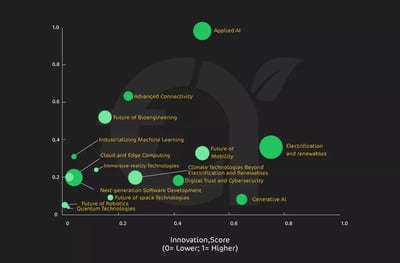
We’ve broken down the five most attractive industries and will give you a peek into what’s happening in them. Here’s a graphic that describes major tech trends:
Why are technology stocks powering future growth?
Technology stocks are powering future growth because the technology sector drives innovation, supports the global economy, and has outperformed many other sectors over the past decade. Their influence extends across industries, where new products and digital infrastructure continue to create demand. This strong market role has helped tech stocks play a major part in broader market growth.
Even amid economic uncertainties, the consistent performance of these stocks shows their resilience and the central role technology now plays in our lives. From changing how we communicate to transforming industries, technology companies are at the forefront of change, offering investors strong growth opportunities.
Although there are many examples of ragingly successful companies, we’ll briefly discuss only one of them. After all, this article is about the sectors and not the companies that are hot right now.
One of the standout performers in this sector is Apple. Known for its continuous innovation in consumer electronics, Apple has consistently pushed the boundaries of technology. Beyond its iconic products, like the iPhone and Mac, Apple is now expanding into new areas such as augmented reality (AR). This commitment to innovation ensures that Apple remains a dominant force in the tech sector.
As an investor, this is how you should be viewing these companies – as a potential vehicle to your financial success.
Why Technology Stocks Now?
The relentless pace of digitalization, the rapid expansion of e-commerce, and the increasing importance of global connectivity have all converged to create a fertile environment for technology stocks. As more aspects of daily life and business operations move online, the demand for advanced technology solutions grows exponentially. This digital transformation is not just a trend but a fundamental shift in how the world operates, creating sustained demand for the software, platforms, and infrastructure that leading technology companies provide.
Some analysts believe we are in a technology stock bubble, but these voices tend to be in the minority, with most experts expecting continued stellar performance from tech companies. Investing in technology stocks now means positioning yourself at the forefront of this ongoing transformation.
These companies are creating the tools and platforms that will define the future and are positioned to capture significant market share as digital adoption rises. This growth potential makes tech stocks an essential part of a future-focused portfolio, offering stability and strong returns in an increasingly digital world.
In our market reviews during high-volatility earnings seasons, the strongest technology names have typically been those with recurring revenue and clear cash-flow visibility, which is why investors should separate durable business models from momentum-driven hype.
Pros of Investing in Tech Stocks
High Growth Potential:
Tech companies often experience rapid growth, leading to significant returns on investment.
Innovation and Disruption:
Tech stocks are typically at the forefront of innovation, which can result in groundbreaking products and services.
Market Leadership:
Many tech companies dominate their respective markets, providing stability and long-term growth opportunities.
Global Reach:
Tech companies often have a global presence, diversifying revenue streams across different regions.
Resilience During Economic Downturns:
Certain tech sectors, like cloud computing and cybersecurity, may remain strong even during economic downturns.
Scalability:
Tech companies can scale quickly due to their ability to leverage digital platforms and global distribution networks.
Cons of Investing in Tech Stocks
High Volatility:
Tech stocks can be highly volatile, with prices often fluctuating significantly in response to market news or changes in investor sentiment.
Valuation Concerns:
Tech stocks are often priced at high valuations, which may not always be justified by their earnings or growth prospects.
Regulatory Risks:
Tech companies may face increasing scrutiny and regulation, particularly in areas like data privacy, antitrust, and taxation.
Competition:
The tech industry is highly competitive, with new entrants constantly emerging, which can erode market share and profitability.
Dependence on Market Trends:
Tech stocks are often heavily influenced by market trends and consumer preferences, which can change rapidly.
Technological Obsolescence:
Rapid technological advancements can render a company's products or services obsolete, leading to declining revenue and profitability.
Join a Trading Community That Moves Together
Follow top traders and learn from real strategies.
Like, comment, and engage with other investors.
Discover experts through transparent performance data.
Connect with a community built on trust and results.
Grow your knowledge while trading smarter together.
.webp)
Why is artificial intelligence worth investing in?
Artificial intelligence is worth investing in because it is one of the most transformative technologies of our time, with growing impact across healthcare, finance, and autonomous vehicles. Its ability to improve automation, analysis, and decision-making is changing how major industries operate. While some comparisons may be exaggerated, the importance of AI as a long-term growth area is clear.
The impact of AI is far-reaching, as it not only enhances efficiency and innovation across multiple sectors but also opens up entirely new markets and opportunities for growth.
One of the standout companies in the AI space is Nvidia. The company has established itself as a leader in AI hardware, particularly by developing powerful graphics processing units (GPU) that are essential for AI applications. These GPUs are the backbone of AI systems, enabling complex computations for deep learning, data analysis, and autonomous systems. Nvidia’s ongoing innovation in AI hardware has positioned it as a key player in the AI revolution and the single hottest stock anywhere in the world.
Why AI Stocks Now?
The adoption of AI is accelerating across consumer and enterprise applications, signaling that we are only at the beginning of AI’s growth curve. AI technologies are becoming increasingly integrated into everyday life, from voice assistants and recommendation engines to complex enterprise solutions that optimize business operations.
This widespread adoption and improving AI capabilities suggest the sector will keep growing in the coming years. This makes now an ideal time for you to invest in AI-related stocks, as the sector is poised for sustained expansion and innovation. Investing in AI today offers the potential to capitalize on a technology that is not just shaping the future but is set to dominate it. If you want to read our article on how to get started with investing in stocks, go here.
Pros of Investing in AI Stocks
High Growth Potential:
The AI industry is rapidly expanding, with significant opportunities for growth as AI technologies become more integrated into various sectors.
Wide Range of Applications:
AI is being adopted across diverse industries, including healthcare, finance, manufacturing, and automotive, leading to multiple revenue streams.
Innovation and Leadership:
Companies at the forefront of AI innovation can establish themselves as market leaders, potentially delivering strong long-term returns.
Increased Efficiency:
AI technologies drive efficiency and productivity gains, making companies that leverage AI more competitive and profitable.
Strategic Importance:
AI is considered a key technology for the future, with governments and large corporations heavily investing in its development and adoption.
Global Impact:
AI has the potential to transform global markets and economies, offering opportunities for growth beyond traditional industries.
Cons of Investing in AI Stocks
High Volatility:
AI stocks can be highly volatile due to the speculative nature of the technology and its perceived future potential.
Regulatory Risks:
As AI becomes more prevalent, it may face increased regulation concerning data privacy, ethics, and employment impacts, which could affect profitability.
Technological Uncertainty:
AI is a rapidly evolving field, and the success of specific technologies or companies is uncertain, leading to potential investment risks.
Ethical and Social Concerns:
The ethical implications of AI, such as job displacement and decision-making transparency, could lead to public backlash or regulatory restrictions.
High Valuations:
Many AI companies are valued based on future potential rather than current earnings, which can lead to overvaluation and market corrections.
Intense Competition:
The AI industry is highly competitive, with numerous companies and startups vying for dominance, which could dilute market share and impact profitability.
Why are green and sustainable technologies a new frontier for investors?
Green and sustainable technologies are a new frontier for investors because the global shift toward sustainability is increasing demand for solutions that address climate change and reduce carbon emissions. Governments, corporations, and consumers are all supporting this transition. That growing recognition is making green technologies more central to the future economy.
As the transition to a low-carbon economy accelerates, green technologies are helping to mitigate climate change and are emerging as powerful drivers of economic growth.
One of the most prominent examples of this trend is Tesla. The company has revolutionized the automotive industry with its EVs, leading the global shift away from fossil fuels. Tesla’s commitment to sustainability extends beyond EVs, as the company also plays a significant role in the energy sector through its solar power and energy storage solutions.
However, as we will explain in the pros and cons section, Tesla’s position of market dominance is under threat from Chinese competitors like BYD. Not only that, at the time of writing, EV sales globally were unstable as demand for EVs was softening. Despite that, Tesla’s influence on the automotive and energy sectors underscores the vast potential of green technologies to reshape industries and contribute to a more sustainable world.
Why Are Green Stocks Hot?
The current landscape presents a great moment for investing in green and sustainable technologies. There is increasing regulatory support worldwide as governments implement policies to encourage the adoption of renewable energy, electric vehicles, and other green technologies.
Consumer demand for sustainable products is also growing as more individuals seek to reduce their environmental impact. These factors, combined with technological advancements and economies of scale, make the green tech sector an attractive option for long-term investment. As the world continues to prioritize sustainability, investing in green technologies now offers the potential for significant returns while contributing to a more sustainable future.
Pros of Investing in Green and Sustainable Stocks
It’s Good for the Planet:
Investing in green stocks supports companies focused on sustainability, contributing to environmental conservation and the fight against climate change.
Growing Market Demand:
As awareness of environmental issues rises, demand for green and sustainable products and services is increasing, driving potential growth in these stocks.
Government Support and Incentives:
Many governments offer incentives, subsidies, and favorable policies for green and sustainable companies, which can enhance profitability.
Long-Term Growth Potential:
Sustainable practices are becoming essential for future business success, positioning green companies for long-term growth and stability.
Diversification:
Green stocks offer a way to diversify an investment portfolio, especially in sectors like renewable energy, electric vehicles, and sustainable agriculture.
Aligning with Values:
Investing in green stocks allows investors to align their portfolios with their personal values and ethical beliefs.
Cons of Investing in Green and Sustainable Stocks
High Volatility:
Green stocks can be volatile due to their reliance on emerging technologies and regulatory environments, leading to fluctuations in stock prices.
Regulatory Risks:
Changes in government policies, such as the reduction or removal of subsidies, can negatively impact the profitability of green companies.
Market Uncertainty:
The green and sustainable sector is relatively new and still evolving, leading to uncertainties in long-term profitability and market leadership.
Higher Valuations:
Green stocks often trade at high valuations due to their growth potential, which may not always be justified by current earnings.
Technological Risks:
The success of green companies often depends on new technologies, which may not always succeed or be adopted widely, leading to potential investment risks.
Limited Track Record:
Many green companies are relatively young and may have limited financial histories, making it harder to assess their long-term viability and stability.
Why are microchips and processors essential to modern technology?
Microchips and processors are the foundational components of nearly every technology that powers our modern world. As demand for technology expands, the role of microchips and processors in driving innovation and enabling new applications keeps growing.
The global chip shortage that has emerged in recent years has underscored these components' critical role in the global economy. Supply-chain disruptions and soaring demand have led to significant shortages, impacting the production of everything from cars to gaming consoles. This shortage has highlighted the vulnerability of supply chains and the essential nature of chip manufacturing, making it a focal point for future investment. As industries and governments alike work to address these challenges, the companies leading the way in chip development and production are poised to benefit from increased demand and investment. As a retail investor, there’s never been a better time to catch the microchip train!
Why Microchips and Processors Now?
The increasing demand for computing power, driven by trends such as cloud computing, artificial intelligence, and the Internet of Things (IoT), makes the microchip and processor sector a prime area for investment.
The ongoing global chip shortage has further intensified the focus on chip production, highlighting the strategic importance of this industry. As digital infrastructure continues to expand, the need for powerful, efficient processors will only grow, making companies like Intel, AMD, and Nvidia crucial to the future of technology. Investing in this sector now gives you an opportunity to capitalize on the rising demand for cutting-edge computing solutions.
Pros of investing in microchips and processors
High Growth Potential:
The demand for microchips and processors is growing rapidly due to advancements in technology, including AI, IoT, cloud computing, and 5G networks. Companies in this sector often experience strong revenue growth.
Industry Essential:
Microchips and processors are critical components in nearly all modern technology, making the sector essential across various industries (automotive, healthcare, consumer electronics, etc.), ensuring consistent demand.
Innovation-Driven:
The sector is characterized by constant innovation, leading to new products and technologies that can drive stock prices higher.
Global Market:
The microchip and processor industry is globally diversified, providing exposure to international markets and economies, which can help mitigate the risks associated with any single market.
Potential for High Returns:
Successful companies in this space, such as Nvidia or AMD, have provided significant returns to investors, especially during periods of high demand for their products.
Cons of investing in microchips and processors
High Volatility:
The sector can be highly volatile, with stock prices reacting sharply to changes in technology trends, competition, and supply-chain issues.
Supply-Chain Risks:
The microchip industry is sensitive to supply-chain disruptions, which have been highlighted during global events like the COVID-19 pandemic. These disruptions can lead to production delays and impact company revenues.
Intense Competition:
The sector is fiercely competitive, with companies constantly striving to out-innovate each other. This can lead to price wars, reduced margins, and fluctuating stock prices.
It’s Capital-Intensive:
The development and production of microchips are highly capital-intensive, requiring significant investment in R&D and manufacturing facilities. Companies may face financial strain, especially during downturns.
Regulatory and Geopolitical Risks:
The industry is subject to regulatory changes, including export restrictions, especially concerning technology transfer to certain countries. Geopolitical tensions, particularly between the U.S. and China, can also impact the sector.
Cyclical Nature:
The semiconductor industry is cyclical, with periods of high demand followed by downturns. Investors need to be prepared for potential fluctuations in stock prices during these cycles.
Why is cloud computing the backbone of digital transformation?
Cloud computing has become the essential foundation for modern digital businesses, enabling various functions from remote work and collaboration to massive data processing and storage. The ability to access computing resources on-demand, scale operations quickly, and reduce IT costs has made cloud services indispensable for companies across all industries.
As businesses continue to digitalize, the role of cloud computing in driving innovation, efficiency, and growth has only become more clear. This technological shift is not just a trend but a fundamental change in how companies operate and compete in the global market. As recently as a few years ago, the word “cloud computing” was a term for IT nerds, but now everyone knows about it. Here are some important facts about the sector.
Headline Cloud Computing Statistics for 2026
12-month revenues for cloud infrastructure services reached $330 billion in 2025.
AWS had the largest market share of cloud infrastructure services at 29% in Q4 2025.
Microsoft Azure had a market share of 22% in Q4 2025, with Google at 12% and all other companies at 37%.
In total, Amazon, Microsoft, and Google accounted for 63% of the cloud market in Q4 2025.
Worldwide public cloud services spending is forecast to reach $723.4 billion in 2025.
The cloud market is projected to be worth $912.8 billion in 2025.
It’s estimated that the world will store 200 zettabytes (2 billion terabytes) in the cloud by 2026.
The average cloud user spends around $400 monthly for a single server. Hosting the entire back-office infrastructure costs an average of $15,000 per month.
Just 11% of organizations have encrypted between 81-100% of the sensitive data they store in the cloud. Based on our review of cloud-sector reporting over the last year, the key takeaway for investors is not just revenue growth but market concentration, because the largest providers still benefit from scale, pricing power, and enterprise lock-in that smaller rivals often struggle to match.
Why Cloud Computing Now?
The shift to cloud-based services shows no signs of slowing, especially as businesses increasingly recognize the benefits of the cloud's scalability, flexibility, and cost efficiency. The COVID-19 pandemic started this shift, pushing even more companies to adopt cloud solutions to ensure business continuity.
It goes without saying that the cloud computing sector is poised for continued growth, making now a great time for investors like you to capitalize on this trend. With their leading positions in the cloud market, companies like Amazon and Salesforce offer significant investment potential as the backbone of the ongoing digital transformation. Investing in cloud computing now provides an opportunity to be part of a sector that is benefiting from durable enterprise spending and will continue to shape digital infrastructure worldwide.
Pros of Investing in Cloud Computing Stocks
Growth Potential:
The cloud computing industry is expanding rapidly, driven by the increasing demand for digital transformation, data storage, and remote working solutions. Companies in this sector often experience high growth rates.
Resilience and Stability:
Cloud services have become essential for businesses of all sizes. This creates a stable revenue stream for cloud companies, even during economic downturns, making them relatively resilient investments.
Innovation and Technology Leadership:
Cloud computing companies are often at the forefront of technological innovation, offering new services and improving efficiency. This can lead to significant competitive advantages and long-term profitability.
Diversification:
Investing in cloud computing can diversify a portfolio, particularly if an investor is already focused on traditional industries. The tech sector often behaves differently from other sectors, helping to balance risks.
High Margins:
Many cloud computing companies operate with high-profit margins due to the scalability of their services. This can lead to strong financial performance and potentially higher returns for investors.
Cons of Investing in Cloud Computing Stocks
Valuation Risks:
Cloud computing stocks can be highly valued, often trading at high PE ratios. This can make them more vulnerable to market corrections or changes in investor sentiment.
Market Saturation:
The cloud computing industry is highly competitive, with major players like Amazon, Microsoft, and Google dominating the market. Smaller companies may struggle to compete or maintain market share, which can affect their stock performance.
Regulatory and Security Risks:
Cloud companies face significant regulatory scrutiny, particularly concerning data privacy and security. Breaches or changes in regulations can lead to increased costs or damage to reputation, impacting stock prices.
Technological Changes:
The tech industry is rapidly evolving, and new innovations could disrupt existing cloud models. Companies that fail to adapt may see their growth stagnate, negatively affecting their stock performance.
Market Volatility:
Technology stocks, including cloud computing companies, can be more volatile than other sectors. Price fluctuations can be significant, making these investments riskier, especially for those with a low-risk tolerance.
How can you start investing in future technologies?
You can start investing in future technologies by following a strategic plan and buying individual stocks in sectors such as artificial intelligence, green technologies, cloud computing, and microchips. This approach gives you exposure to companies leading major areas of innovation. Focusing on established sector leaders can make your first steps more targeted and easier to evaluate.
If you are looking for broader exposure without the need to pick specific stocks, sector-specific ETFs or mutual funds are excellent options. These funds pool investments into a basket of companies focused on specific industries, providing diversification and reducing the risk associated with single-stock investments. For example, ETFs that focus on technology, AI, or renewable energy can expose you to a wide range of companies driving innovation in these fields.
Staying informed is crucial when investing in rapidly evolving sectors. Keeping up with market trends, regulatory changes, and technological advancements will help you make informed decisions. Following financial news, subscribing to industry reports, and engaging with investment communities can provide valuable insights.
As we’ve said, investing in emerging technologies is not without risks. Market volatility can be higher in these sectors, as they often involve companies still in the growth phase and can experience rapid changes in valuation. Regulatory hurdles, such as government policies or international trade issues, can also impact the success of these technologies. Additionally, technological obsolescence is a real concern.
However, if you know anything as a retail investor, it’s that diversification is key to managing these risks. Spread your investments across different sectors and companies to minimize exposure to any area.
One pattern we repeatedly see when reviewing retail-investor behavior during fast-moving tech rallies is overconcentration in a single theme, so using position limits and phased entries can be just as important as choosing the right sector.
The Bottom Line
Top 5 growth technologies worth investing in 2026 highlight where innovation and opportunity are moving fastest. From AI and cloud computing to microchips and sustainable technologies, these sectors have the potential to reshape industries and create long-term value for investors who act thoughtfully. The key is to focus on strong fundamentals, follow the companies leading real change, and make sure any investment fits your broader goals and risk tolerance. Start researching these technologies now, because the earlier you understand tomorrow’s growth drivers, the better positioned you may be to benefit from them.
FAQ
Artificial intelligence, green technologies, cloud computing, and microchips are the key emerging technologies that will significantly influence the future economy.
The ongoing digital transformation, driven by rapid technological advancements and increasing global connectivity, creates a fertile environment for growth in tech stocks, making it an ideal time for investment.
They support environmental conservation, align with growing market demand for sustainability, and benefit from government incentives, positioning these stocks for long-term growth.
AI is revolutionizing industries like healthcare, finance, and autonomous vehicles by enhancing efficiency and creating new markets. Investing in AI offers the potential for substantial market growth as AI becomes increasingly integrated into everyday life.
Microchips and processors are essential to modern technology, powering everything from consumer electronics to advanced scientific research. The increasing demand for computing power and the ongoing global chip shortage make this sector a prime area for investment.
Risks such as high volatility, regulatory challenges, rapid technological obsolescence, and intense competition, which can impact the profitability and stability of tech investments.
You can start by buying individual stocks of leading companies in emerging sectors or by investing in sector-specific ETFs or mutual funds for broader exposure. It also emphasizes the importance of staying informed and diversifying investments to manage risks effectively.
The article highlights artificial intelligence, green and sustainable technologies, microchips and processors, and cloud computing as the main growth areas. These sectors are tied to long-term digital adoption, higher computing demand, and the shift toward cleaner energy.
The article argues that digitalization, e-commerce growth, and global connectivity are still expanding. That supports continued demand for tech products and services, which can create long-term growth opportunities for investors willing to accept market volatility.
AI is spreading across consumer tools and enterprise systems, from automation to data analysis. The article sees this as an early-stage growth trend, with companies supplying core AI hardware and software positioned to benefit most.
Green investments can benefit from rising consumer demand, policy support, and the global push to lower emissions. The article also notes they may offer long-term growth while letting investors back businesses aligned with sustainability goals.
Yes. The article points to volatility, changing regulations, high valuations, and uncertainty around which technologies will scale successfully. Many companies are still developing their business models, so returns can be uneven.
Chips power smartphones, data centers, AI systems, cars, and connected devices. The article says rising demand for computing power, plus supply-chain pressure and strategic importance, makes semiconductors a critical sector to watch.
According to the article, yes. Businesses still rely on cloud services for storage, software delivery, remote work, and scaling operations, which supports ongoing demand as digital transformation continues across industries.
The article highlights volatility, valuation risk, regulation, competition, and technological obsolescence. These sectors can grow quickly, but share prices may swing sharply when sentiment, policy, or innovation trends change.
The article suggests starting with either individual stocks in leading companies or ETFs and mutual funds for broader exposure. It also stresses diversification, ongoing research, and using a strategic plan rather than chasing hype.
In preparing this overview, we compared company filings, sector earnings commentary, and market-share data published over the past 12 months to identify the technologies with the clearest long-term investment relevance for retail investors.